
If you have any questions please call
(03) 9898 4216
New patients welcome.
Please bring a referral from – GP or Specialist.
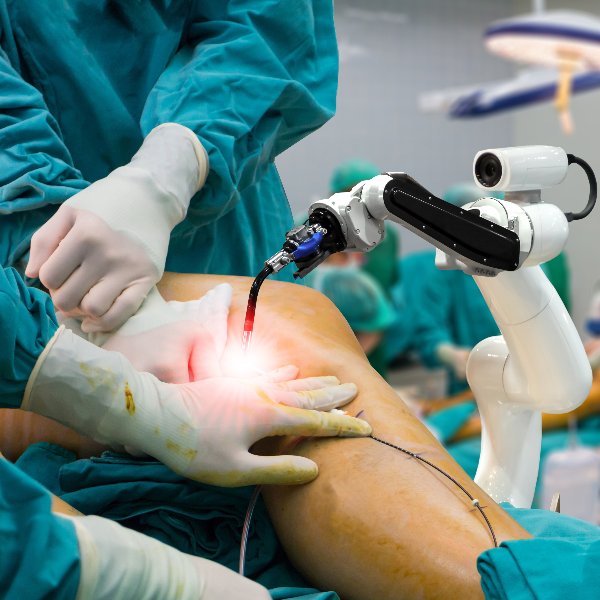
Who is a Good Candidate for Robot Assisted Knee Replacement Surgery?
Typical candidates for a robotic-assisted knee replacement include patients who experience:
Dr Riazi will first try non-surgical treatments such as medication, physiotherapy or injections to relieve pain and inflammation.
If these are no longer effective, a total knee replacement may be recommended to provide long-term pain relief and improve mobility.
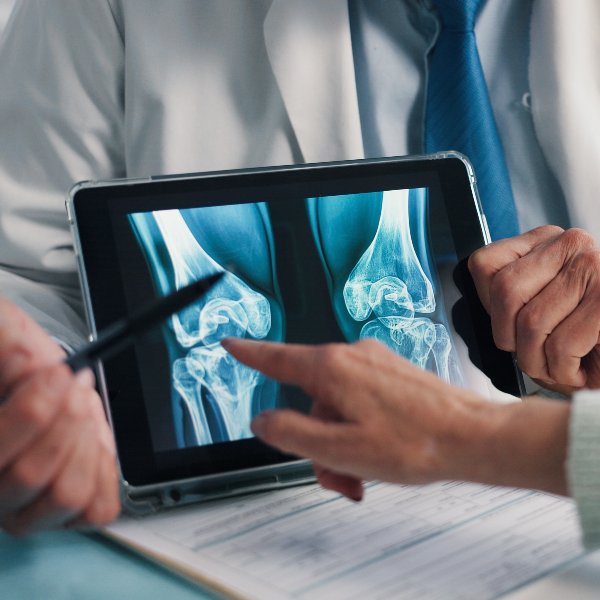
About the robotic knee replacement system
The robotic knee replacement system can used for:
Partial knee replacement – for osteoarthritis affecting one side of the knee (medial, lateral, or patellofemoral compartments)
Total knee replacement – when the entire joint requires replacement.
Through a small 10-15 cm incision, only the diseased bone and cartilage are removed, leaving healthy tissue untouched. The robotic system allows for 3-D modelling and templating enabling Dr Riazi to ensure your implant is:
During surgery, Dr Riazi can also adjust and fine-tune the implant position in real time for optimal ligament balance.
Benefits of Robotic Surgery
The aim of robotic-assisted surgery is to improve surgical precision, component alignment, and soft-tissue balance — all of which are critical for the long-term success of your knee replacement.
Potential advantages include:
The Australian Orthopaedic Association National Joint Replacement Registry (AOANJRR) has reported encouraging early results for robotic-assisted partial knee replacement procedures.
Robotic Knee Replacement Surgery Melbourne
Dr Arash Riazi – Orthopaedic Surgeon
If you have any questions about Knee Replacement Surgery please contact my offices:
What happens during knee replacement surgery?
1. Your Personalised Plan – A long leg standing X-ray scan is used to generate a detailed 3-D model of your knee.
This enables Dr Riazi to map the exact areas of damage and create a customised surgical plan, uploaded into the robotic system.

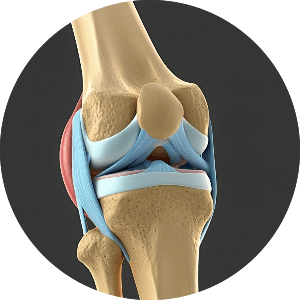
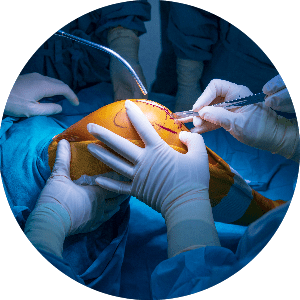
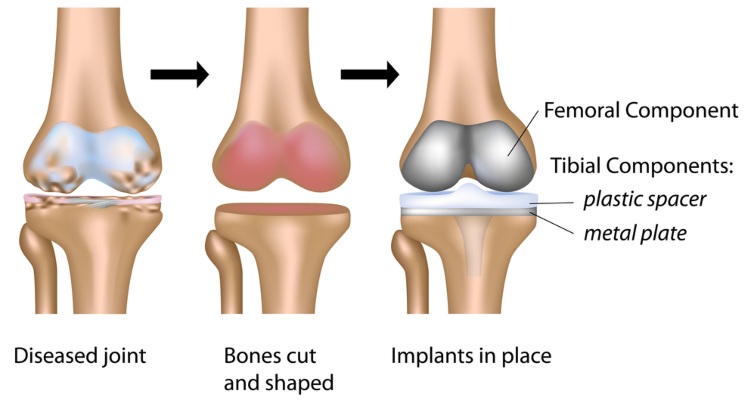
Preparing for knee replacement surgery
Please ensure to let Dr Riazi know about any medical conditions you may have. You will be referred by Dr Riazi to a Perioperative Physician, who will assess your overall health and fitness to undertake surgery and anaesthesia. You may need to have some pre-operative tests such as blood tests, an echo-cardiogram and/or a chest x-ray.
1. Your Medications and Surgery – It is very important that Dr Riazi knows about all the medicines you are taking before your surgery. This includes:
All over the counter and prescription medicines
Please bring a written list of all your medications (or bring the boxes/bottles) to your consultation, and when you come into hospital for your surgery. This helps ensure your operation and treatment is safe and well-planned.
2. Smoking – Smoking increases the risk of complications and infection. Quitting before surgery improves healing and overall health. Your GP can help with support.
3. Keeping fit – Being as fit as possible before surgery helps reduce complications and speeds recovery. Gentle options like swimming or hydrotherapy are ideal if mobility is limited.
4. Fasting – Dr Riazi’s team will advise you. Typically, fast from midnight for morning surgery or from 6am for afternoon surgery. Clear fluids are allowed up to 4 hours before surgery.
5. Home preparation – Simple steps at home can help make your recovery safer and easier after surgery.
Knee replacement surgery – Potential complications
Potential complications may include but not limited to:
Post-Operative Recovery & Rehabilitation
After your operation
You’ll recover briefly before moving to the ward, where nursing staff will care for you. Early movement is encouraged to speed recovery and reduce blood clot risk. A physiotherapist will helping you stand and walk—often the same day or next day support you until you’re moving independently.
Post operative wound care instructions
Rehabilitation – Exercises and walking
Rehabilitation, led by your physiotherapist, focuses on:
.
Full recovery may take several months, and consistent exercise is key to long-term success.
Robot-assisted Knee Replacement Surgery Melbourne
Dr Arash Riazi – Orthopaedic Surgeon
If you have any questions about Knee Replacement Surgery please contact my offices:

ROBOTIC KNEE REPLACEMENT SURGERY MELBOURNE
Dr Riazi consults with public and private orthopaedic patients from all over Melbourne. Public patients – Epworth Eastern Hospital – 12th Floor – Suite 12.4, 1 Arnold Street, Box Hill, VIC 3128. Public patients – Box Hill Hospital, 8 Arnold Street, Box Hill, VIC 3128. He also has a private consulting location at Adeney Private Hospital, 209 Cotham Road, Kew Vic 3101.