
ACL KNEE RECONSTRUCTION MELBOURNE
ACL Knee Reconstruction Melbourne – A patient’s guide
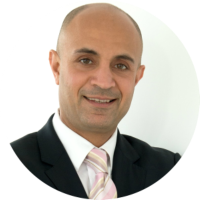
Dr Arash Riazi – MBBS, BSc (Med), FRACS (Ortho), F.A.Orth.A.
Orthopaedic Surgeon.
If you have any questions please call
(03) 9898 4216
New patients welcome.
Please bring a referral from – GP or Specialist.
What is the Anterior Cruciate Ligament (ACL)
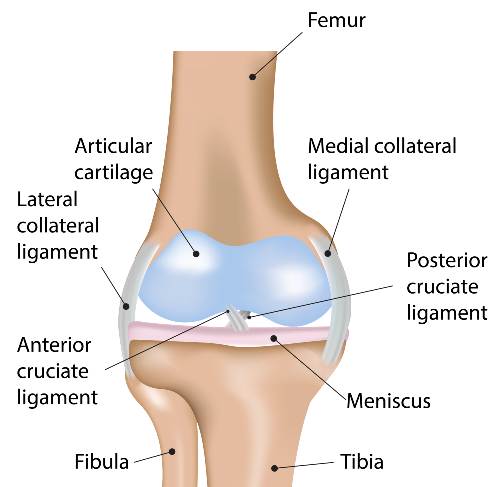
The knee joint is stabilised by four major ligaments, including the anterior cruciate ligament (ACL), which runs diagonally in front of the knee.
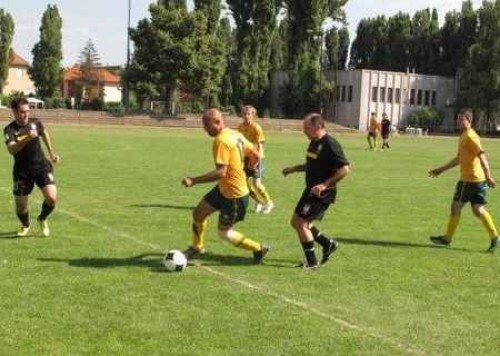
The ACL controls twisting movements and prevents the tibia from sliding forward, making it vital for sports like soccer and skiing.
ACL tears or sprains commonly occur during sudden stops combined with twisting or pivoting, causing pain, swelling, and instability.
Initial treatment includes pain relief, ice, and compression, and weight bearing is often difficult.
A medical exam is needed to assess ligament and other possible structural damage.
Treatment depends on injury severity and desired activity level.
ACL injuries – Non-surgical treatment
A torn ACL will not heal without surgery. However, if no other parts of the knee are damaged, movement often returns within 4–6 weeks, and you may be able to walk normally.
For people who are not very active or don’t play sports, non-surgical (conservative) treatment can work well. This usually includes:
Physiotherapy – Exercises to strengthen the thigh muscles (quadriceps and hamstrings), improve balance, and support the knee.
Knee brace – A hinged knee brace can provide extra support and help you feel more confident when moving.
Activity modification – Avoiding sudden twisting or pivoting movements helps protect the knee.
Home exercise program – Regular stretching and strengthening exercises prescribed by a physiotherapist may help to improve knee strength and function.
Some people who choose non-surgical treatment may still experience knee instability, which can increase the risk of further damage in the future.
ACL Injuries – Surgical Treatment
Surgical treatment may be recommended for patients who:
- Wish to return to sports
- Require pivoting, turning or manual work for their occupation/profession
- Have ongoing knee weakness or instability
- Are susceptible to further injuries which could lead to degenerative arthritis and disability.
Many patients who sustain an ACL injury may have also have damaged other parts of the knee such as the meniscus or other ligaments. For these combination injuries, surgical treatment is warranted and may produce better outcomes.
ACL Knee Reconstruction Melbourne
Surgical Options
ACL reconstruction is an arthroscopic (keyhole surgery) procedure in which a graft is placed inside the knee to help reconstruct the torn ligament. Arthroscopic surgery is the preferred method due to:
- Less invasive than open knee surgery
- Reduced risk of infection
- Shorter recovery time
Dr Riazi is trained in a number of different arthroscopic techniques and will discuss with you the most appropriate approach for your needs. All these surgeries require overnight hospital stays:
- Arthroscopic (keyhole) ACL reconstruction using hamstring tendon grafts
- Arthroscopic (keyhole) ACL reconstruction using rectus femoris (quad tendon) grafts
- Arthroscopic (keyhole) ACL reconstruction using allograft (donor tissue)
- Arthroscopic (keyhole) ACL reconstruction using synthetic graft.
What happens during surgery
An anaesthetist will assess you and decide on the most suitable form of anaesthetic. Usually you are given a general anaesthetic so that you are completely asleep during the operation.
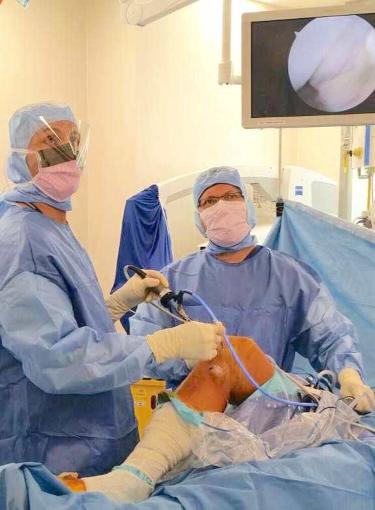
Several incisions are made around the knee in order to insert the arthroscope and surgical instruments.
An arthroscope is a device with a light and camera at the end which is connected to a TV monitor and allows Dr Riazi to visualise your injury up close.
The damaged ACL is carefully removed. A drill is then inserted via another incision to prepare small holes in the bone which will be used to secure the graft in place. A needle is used to pull the graft into the original spot where the damaged ACL was and this is then secured with screws or staples.
Finally your knee will be bandaged up and you will be transferred to the recovery room. The entire procedure takes between 1 and 2 hours. You will receive intravenous antibiotics prior to surgery and for 24 hours post-operatively to minimise the chances of infection.
Preparing for surgery
Once the decision is made between yourself and Dr Riazi to have surgery, we will help guide you to prepare for the operation. It is often helpful to make a checklist for yourself.
1. Preparing for surgery
Make sure that you let Dr Riazi know about any medical conditions you may have. You will be referred by Dr Riazi to a Perioperative Physician, who will assess your overall health and fitness to undertake surgery and anaesthesia. You may need to have some pre-operative tests such as blood tests, an echo-cardiogram and/or a chest x-ray.
If you have any dental work planned, make sure that it is completed well in advance of surgery. It is important that any dental infections are dealt with prior to surgery to reduce the risk of infection
2. Your Medications and Surgery
It is very important that Dr Riazi knows about all the medicines you are taking before your surgery. This includes:
- Prescription medicines
- Over-the-counter medicines (such as pain relief or cold tablets)
- Herbal or natural supplements
- Vitamins
- Weight loss medications (such as Ozempic®, Wegovy®, Saxenda®, Mounjaro® and others)
Please bring a written list of your medications (or bring the boxes/bottles) to your consultation and when you come into hospital for your surgery. This helps ensure your treatment is safe and well-planned.
Some medications can affect how your body responds to surgery or anaesthetic. For example:
- Blood-thinning medicines (such as aspirin, warfarin, or some anti-inflammatory tablets) can increase the risk of bleeding and may need to be stopped several days before your operation.
- Weight loss medications such as Ozempic® (semaglutide) and similar drugs can slow down stomach emptying and may increase the risk of nausea or vomiting during anaesthesia. You may be advised to stop these at least one to two weeks before surgery — please check with Dr Riazi or your anaesthetist.
- Corticosteroids and insulin may need to be adjusted before and after surgery to help with healing and blood sugar control.
- Some herbal supplements (such as ginkgo, garlic, or ginseng) can also thin your blood or interfere with anaesthetic medicines.
Dr Riazi and your anaesthetist will work with you to make a safe plan for managing your medications before and after surgery.
Never stop or change your medications on your own, always check first.
3. Smoking
Smoking has a significant effect on your health and also increases your risks of problems during and after surgery, including risk of infection. Stopping smoking before your procedure and staying smoke free during recovery can substantially improve wound healing as well as your general health. If you are a smoker then now is a good time to quit for good, please contact your GP for help in quitting smoking.
4. Check for cuts/lesions
It is very important that there are no cuts or lesion on your legs at the time of surgery as the presence of these can increase your chances of infection. Please contact our offices if you have any skin lesions. Avoid shaving or waxing for at least one week prior to surgery.
5. Pre-surgery exercises
The time between your ACL injury and surgery is very important. Initially due to pain and swelling you will be on crutches and avoiding full weight bearing. At about three weeks post injury the pain and swelling should have lessened to a degree and you can start to regain motion in your knee. It is imperative to have full motion prior to surgery and you will need to follow an exercise programme to regain as close to full range of motion as possible in preparation for surgery. This will help your recovery after the procedure.
Insert pamphlet link *proceed with website and add this later)
Possible complications
D r Arash Riazi – Help centre
There are risks associated with any surgical procedure. I will discuss the risks with you before you make the decision to undertake ACL knee replacement surgery.
The list below is not exhaustive but covers some of the more common complications:
1. Infection
The risk of infection with ACL reconstruction is generally very low. You will be given antibiotics both during and after the procedure to further prevent any risk.
2. Blood clot
Although very rare, there is a small risk of blood clot in the veins of the calf or thigh
Venous Thromboembolism (VTE) – A VTE is when there is a blood clot inside a blood vessel. There are two types of VTE
Deep Vein Thrombosis (DVT) – this is a blood clot that forms in a vein, usually in the leg. Signs and symptoms include redness, swelling and pain but sometimes there are no symptoms at all.
Pulmonary Embolism (PE) – is when the blood clot becomes dislodged and travels to the lung. Symptoms of a PE include chest pain, breathlessness and coughing.
All patients are given measures to prevent a VTE from happening. These may include blood thinning medications and below the knee compression stockings. It is important to move around as soon as possible after surgery and the nurses and physiotherapists will help you do that.
3. Pain
As with any surgical procedure, you may experience some pain. We use various anaesthetic and pain killing techniques to minimise and manage your pain. It is important that you get adequate pain relief so that you are able to move around as soon as possible after your operation.
Dr Riazi and his team use a combination of opioids and non-steroidal anti-inflammatory drugs (in patients for whom it is safe and appropriate) to provide optimum pain relief whilst minimising side effects.
4. Anaesthesia risks
Your anaesthetist will meet with you before the operation and discuss the risks with you as well as the best option for you.
5. Numbness
There may be some numbness on the part of the leg close to the incision. This is nothing to be worried about, the numbness will likely fade over time.
6. Knee stiffness and pain
Some patients may experience knee stiffness and pain which is addressed with physiotherapy.
7. Loss of motion
You may experience some loss of motion and be unable to fully straighten your leg.
Post-operative recovery
After the procedure you will be transferred to the recovery area and then to a surgical ward where you will be looked after by nursing staff. You will be given pain medications to manage your pain and encouraged to elevate your leg to reduce swelling.
A traditional approach of:
Rest – Making sure to keep your knee straight (do NOT put a pillow under your knee).
Ice – 15-20 mins each time.
Compression – Keep the tubigrip bandage in place whilst moving.
Elevation – At rest, elevate the leg above heart level.
It is safe to fully weight bear the knee if pain allows. Most patients use crutches for the first few days. When ready to progress, start by dropping down to one elbow crutch on the opposite arm to the leg that has been operated on and then when able, progress to walking without crutches.
The main goal of ACL reconstruction surgery and rehabilitation is to get you back to pre injury activity level and sports. The success and speed of recovery following ACL reconstruction will largely depend on your dedication to the rehabilitation guide and exercises.
Exercises
Your physiotherapist will show you the exercises that you will need to do to help recover. It is very important to follow their advice in order to progress through the different phases of rehabilitation.
Pain management
Managing your pain effectively is vital for regaining mobility. By controlling your pain you will be more able to achieve your goals and see better outcomes.
Hydrotherapy
Once the incisions are fully healed and if there are no complications then hydrotherapy can help aid your recovery. This is usually at least three weeks after surgery. Low impact water exercises can help strengthen muscles with minimal pain. You must avoid any kicking for at least 8 weeks post surgery. Do not return to swimming breast-stroke, butterfly or freestyle until advised by Dr Riazi.
Water walking: Walking in water that is waist high for 5 minutes at a time will help with stability and balance. This can gradually be increased to 30 minutes. Try to walk as normally as possible
Knee raises: Stand with your back to a wall in water that is chest high and keep your feet shoulder width apart. Bend your knee and raise your thigh to waist high and so that it is parallel to the water surface. Then slowly straighten your leg completely and return the leg back to the ground. Repeat 10 times.
ACL recovery time can vary depending on how committed to the rehabilitation exercises you are. Generally it will take at least 9 months to return to competitive sports following ACL surgery.
IMPORTANT NOTE
This information is designed to be a guide only. Every patient has unique needs and will react differently to surgery, pain management and recovery approaches.
If you would like more details or have any worries or questions about ACL Knee Reconstruction surgery please contact my offices so I may address your concerns.
ACL KNEE RECONSTRUCTION MELBOURNE
Dr Riazi consults with public and private orthopaedic patients from all over Melbourne in relation to ACL knee reconstruction surgery. His current consulting locations include Epworth Eastern Hospital in Box Hill and Box Hill Hospital (Eastern Health) in Box Hill.